
Alert!
Report sightings of this species:
– with the iPhone and Android recording app: Asian Hornet Watch
– online at: www.nonnativespecies.org/alerts/asianhornet
– by email: alertnonnative@ceh.ac.uk
Species Description
Scientific name: Vespa velutina
AKA: Yellow-legged Hornet
Native to: Asia
Habitat: Nests usually high in trees and man made structures, sometimes closer to the ground; hunts honey bees, other insects and also feeds on fruit and flowers.
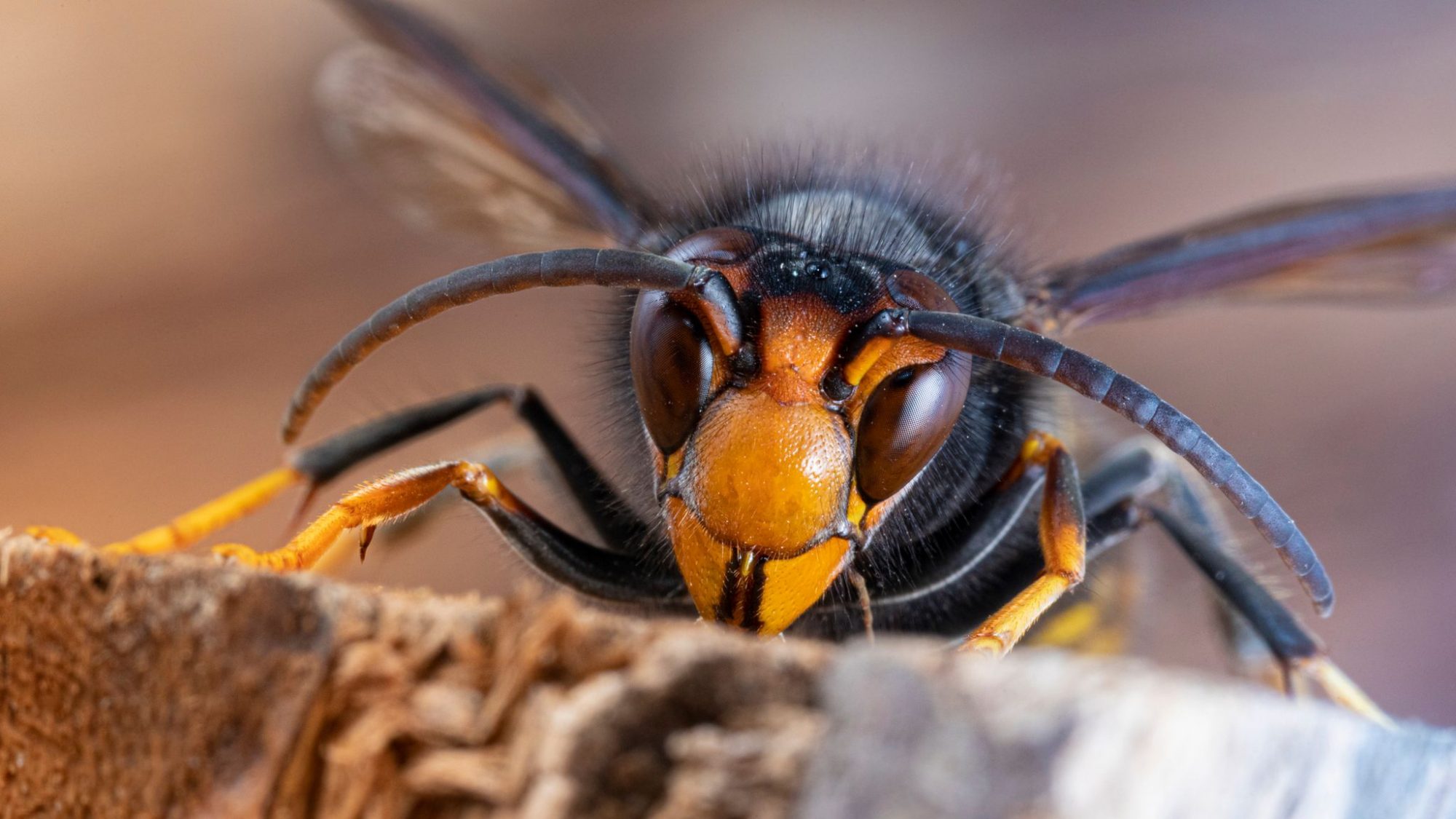
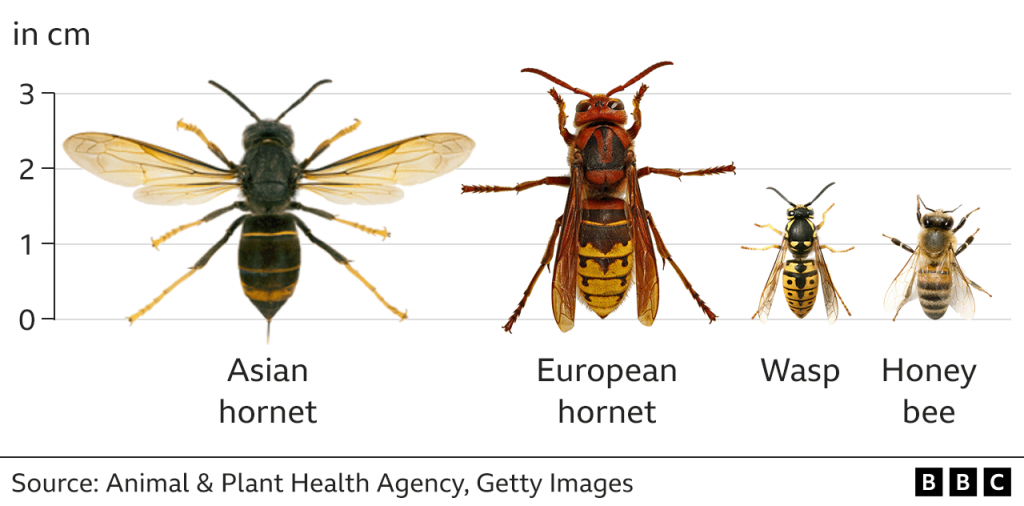
Not easily confused with any other species. Dark brown or black velvety body. Characteristically dark abdomen and yellow tipped legs. Smaller than the native European Hornet.
Introduced to France in 2004 where it has spread rapidly. A number of sightings have been recorded in the UK since 2016. High possibility of introduction through, for example, soil associated with imported plants, cut flowers, fruit, garden items (furniture, plant pots), freight containers, in vehicles, or in/on untreated timber. The possibility that it could fly across the Channel has not been ruled out.
A highly aggressive predator of native insects. Poses a significant threat to honey bees and other pollinators.
Do not disturb an active nest. Members of the public who suspect they have found an Asian Hornet should report it with a photo using the details provided in the red box at the top of this ID sheet.
Key ID Features
Asian hornet (Vespa velutina) for comparison
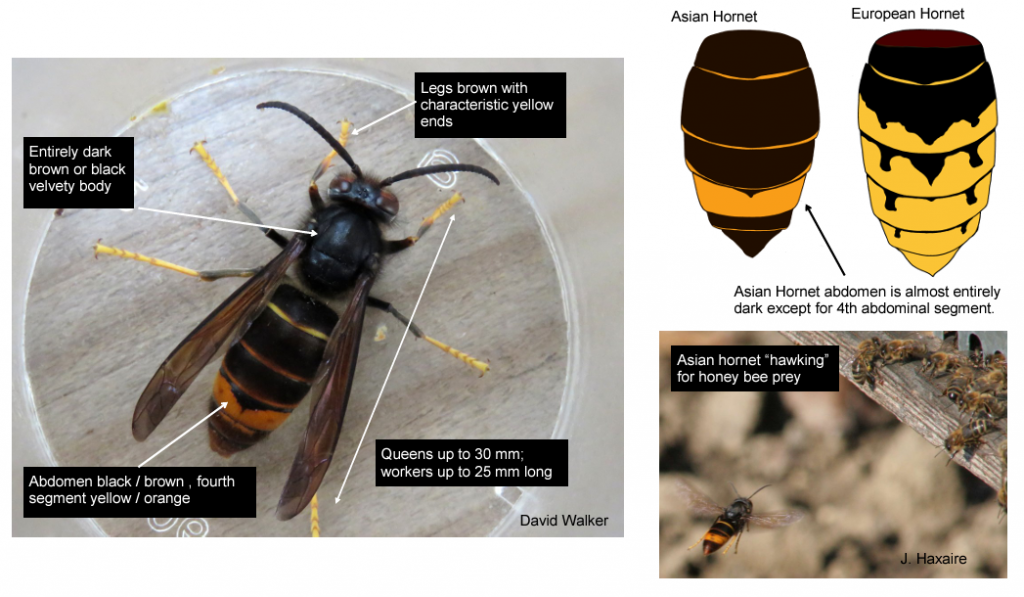
- Queen up to 30mm long, worker up to 25mm long
- Legs yellow at the ends
- Dark brown / black abdomen with a yellow / orange band on 4th segment
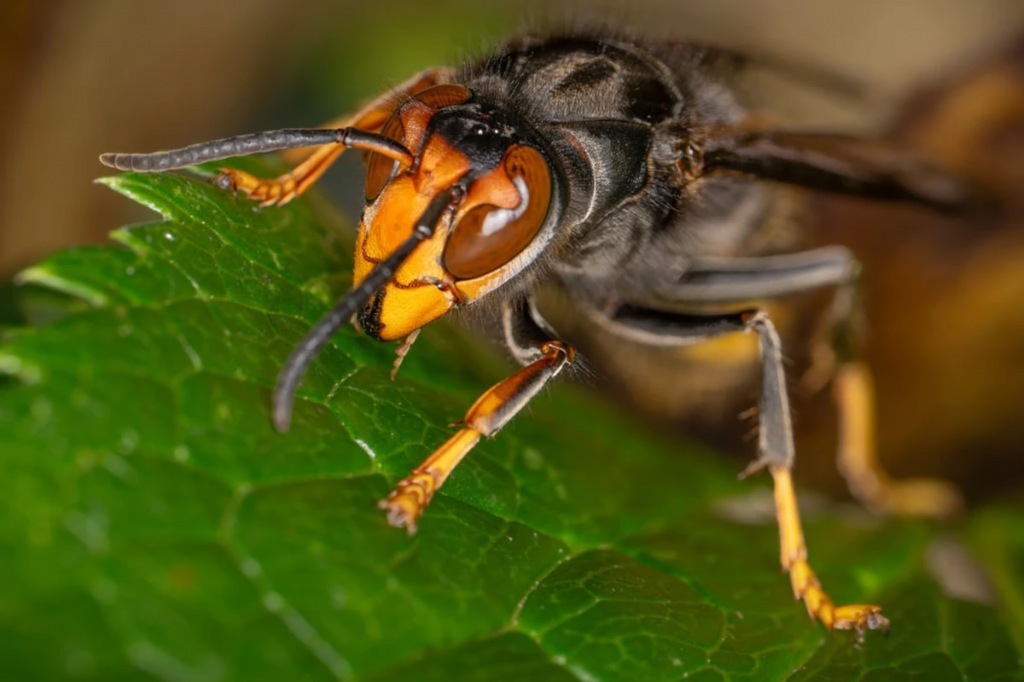
- Head dark from above, orange from front
- Dark coloured antennae
- Entirely black velvety thorax
- Never active at night
Similar Species
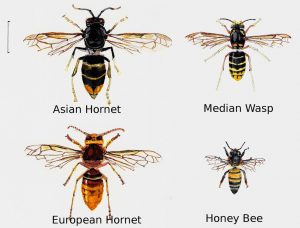
European hornet (Vespa crabro)
- Queen up to 35mm long, worker up to 30mm long
- Legs brown at the ends
- Yellow abdomen marked with brown on the upper part, not banded
- Head yellow from above, yellow from front
- Yellow antennae
- Thorax black with extensive brown markings
- May be active at night
Giant woodwasp (Urocerus gigas)
- Larger than Asian hornet, female up to 45mm long
- Legs yellow
- Distinctive yellow and black banded abdomen
- Long cylindrical body unlike Asian hornet which has an obvious waist
- Long yellow antennae
- Female has an obvious long sting-like appendage (ovipositor) which it uses to lay eggs in trees
Hornet mimic hoverfly (Volucella zonaria)
- Abdomen has more yellow stripes than Asian hornet
- Legs darker than Asian hornets
- Only one pair of wings (hornets and wasps have two pairs)
- Large, globular eyes
Median wasp (Dolichovespula media)
- More extensive yellow and orange colouration on abdominal segments than Asian hornet
- Yellow markings on thorax unlike Asian hornet
Field Signs
Active April-November (peak August/September). Mated queens over winter singly or in groups, in various natural and man-made harbourages – underneath tree bark in cavities left by beetle larvae, in soil, on ceramic plant pots – potentially any small, well-insulated refuge. Makes very large nests in tall trees in urban and rural areas, but avoids pure stands of conifers. Will use man made structures (garages, sheds etc.) as nesting sites.
Alert!
Report sightings of this species:
– with the iPhone and Android recording app: Asian Hornet Watch
– online at: www.nonnativespecies.org/alerts/asianhornet
– by email: alertnonnative@ceh.ac.uk
For more information visit:
www.nonnativespecies.org OR www.nationalbeeunit.com
Source: nonnativespecies.org